Case Study: Drug Information App
Role
UI/UX Designer
Skills
Research
Wireframing
Prototyping
Information Architecture
Industry
Healthcare Technology
Note
Medlink is a placeholder brand made for this NDA project, any resemblance to real brand/company is purely coincidental.
Overview
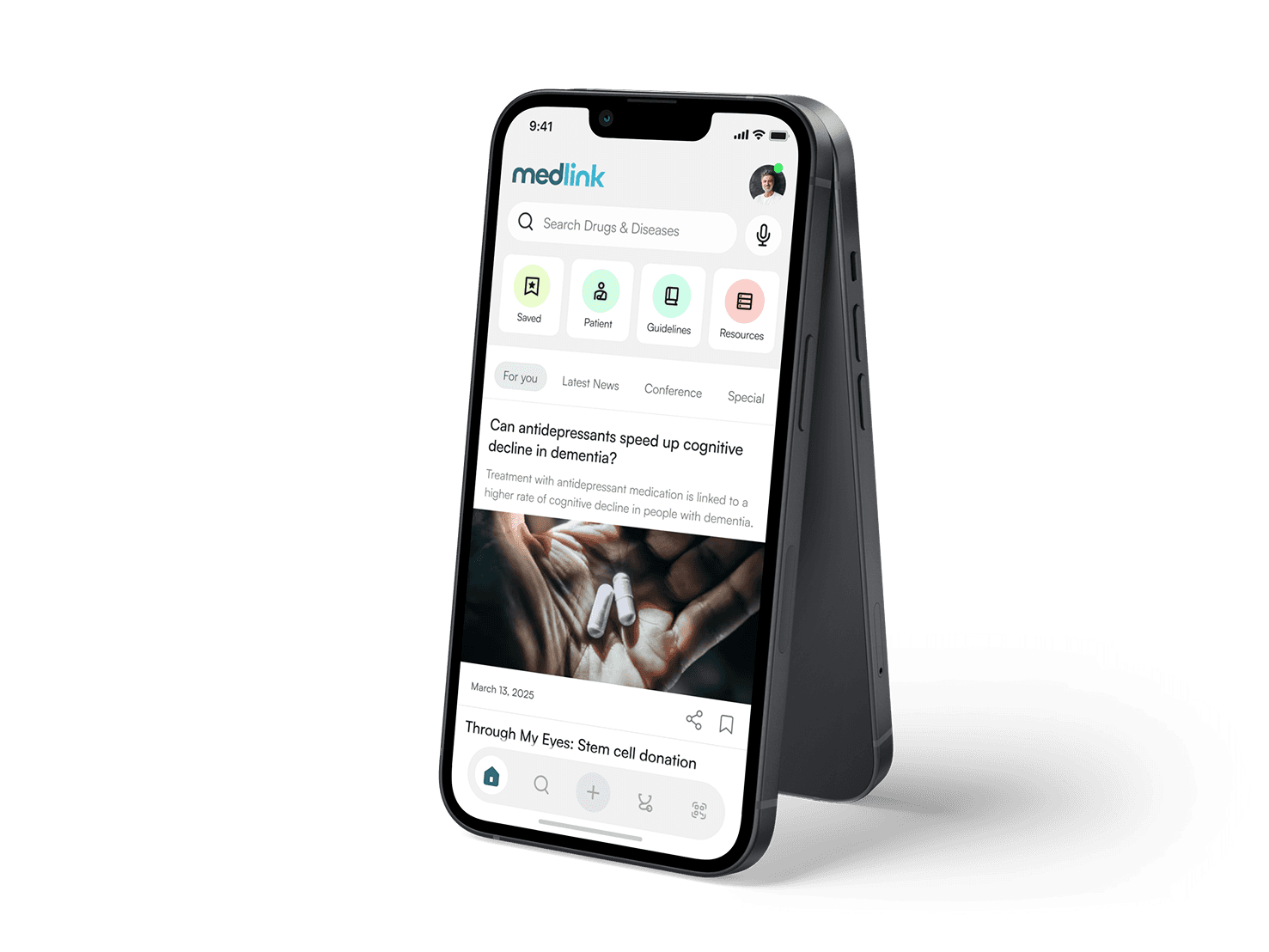
This app is a go-to drug information platform for doctors, offering AI-powered voice search, real-time drug interaction checks, and offline access. It streamlines the way healthcare professionals access accurate and up-to-date medication details, enhancing efficiency and patient safety.
Problem
Physicians and healthcare professionals often encounter several challenges when using online global resources for drug information, disease information, medical news, and other medical-related content.
Goal
Research, strategize and design a go-to-app tailored for healthcare professionals addressing these problems by integrating modern AI technology combined with a user-friendly experience.
My Process
Emphatize
Conceptualize
Design
Measure Success
Objective:
To understand how healthcare professionals (HCPs) search for drug information, identify their pain points, and uncover their preferences in order to improve the design of a drug information platform.
User Group (Primary):
Doctors, pharmacists, nurses, and medical students.
Key Findings:
Speed & Accuracy are top priorities
Prefer concise, evidence-based summaries over long descriptions.
Search by drug name is most common, but symptom-based search or drug class filters are also used.
Need offline access in case of poor hospital Wi-Fi.
Prefer cross-referencing multiple sources to confirm drug interactions and dosages.
Value regular updates to reflect new guidelines or drug warnings.
Key Painpoints:
Slow or Inaccurate Search
Search results often show irrelevant drugs, misspellings aren't corrected, or the desired drug is buried in a list.
Information Overload
Too much text without hierarchy—makes it hard to scan quickly.
Poor Navigation
Difficult to switch between sections like side effects, dosage, or interactions.
Connectivity Dependency
Many apps don't function offline or perform poorly on hospital Wi-Fi.
Outdated Info
Some apps fail to display the last update or aren't current with the latest drug guidelines.
Lack of Personalization
No way to bookmark frequently used drugs or see recent searches.
Inconsistent Terminology
Varies across regions; international users may struggle with unfamiliar drug brand names.
Competitor Insights
Medscape
Strengths
Rich content, drug interaction checker, medical news
Weakness
Slightly cluttered UI, slower search
Drugs.com
Strengths
Clean structure, easy interaction checker
Weakness
US-centric, limited offline support
MIMS
Strengths
Region-specific info, good UI
Weakness
Can be subscription-locked, less global drug coverage |
Design Opportunities:
Designing a drug info app for HCPs means prioritizing speed, clarity, and reliability. There is a major opportunity in:
Smarter, typo-tolerant search
Offline-friendly design
Visual summaries
Cross-reference tools
Customization (bookmarks, recent searches)
Conceptualize
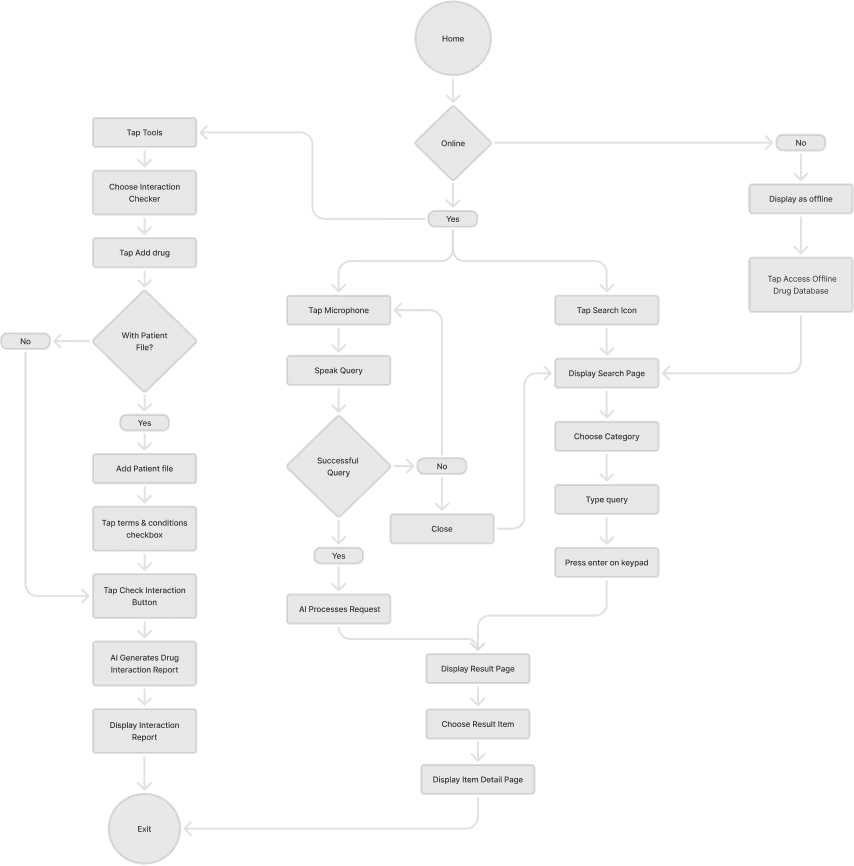
Task Flow
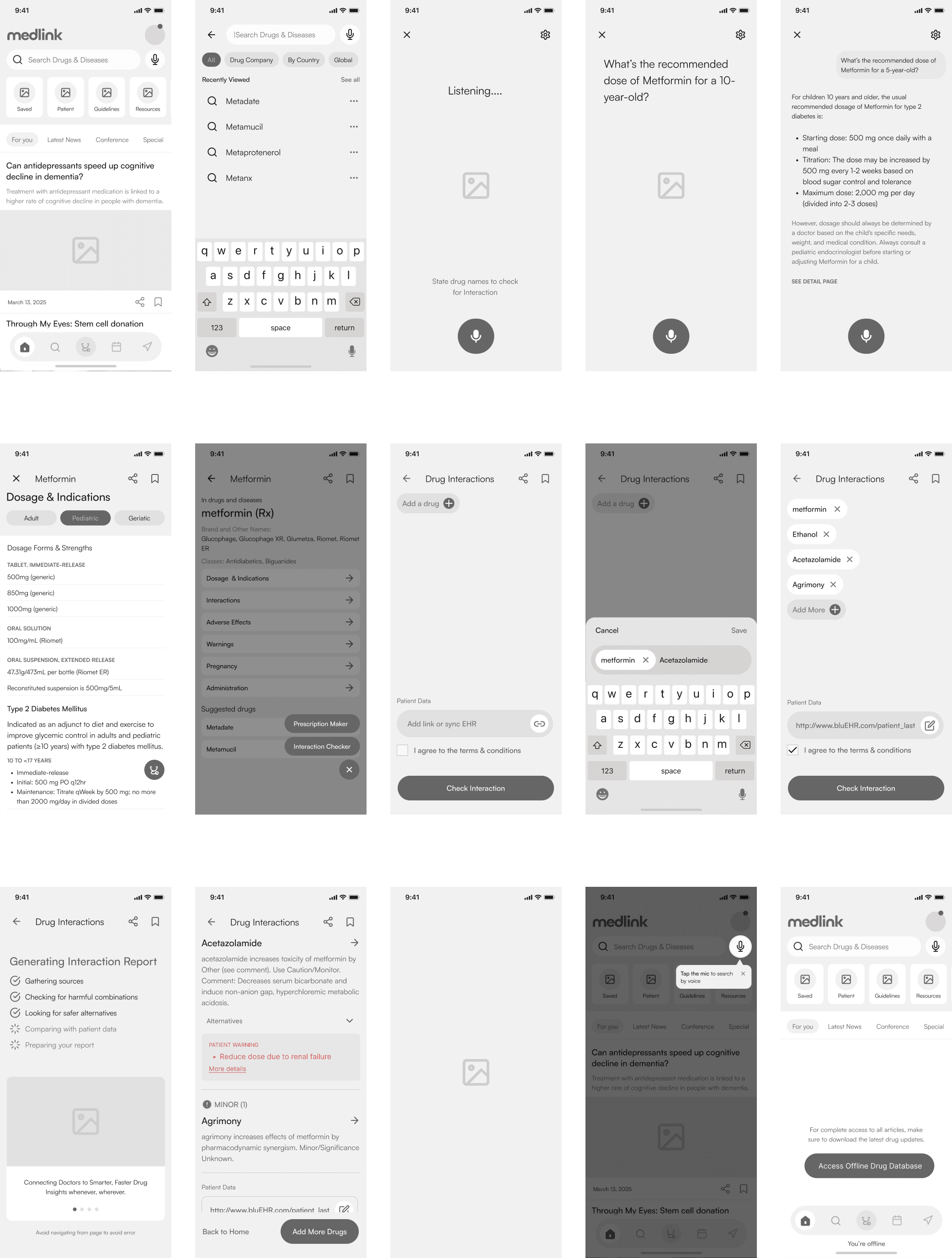
Initial Wireframes
Design
Typography & Color
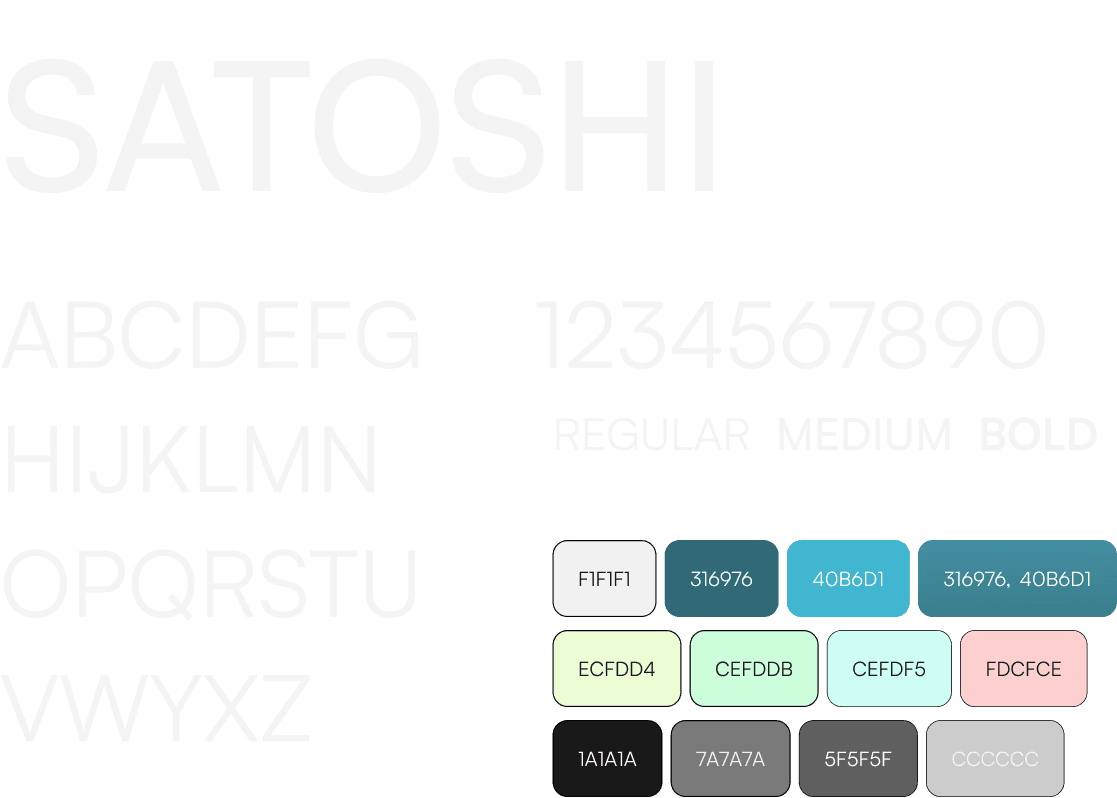
Why Satoshi? It’s clean, uniform and reader-friendly. As an information-heavy app made up of chunk of texts, Medlink needs a typeface that works dynamically across the interface and doesnt’ tire the eyes of the users.
Medlink uses calm, professional and medical-familiar colors.
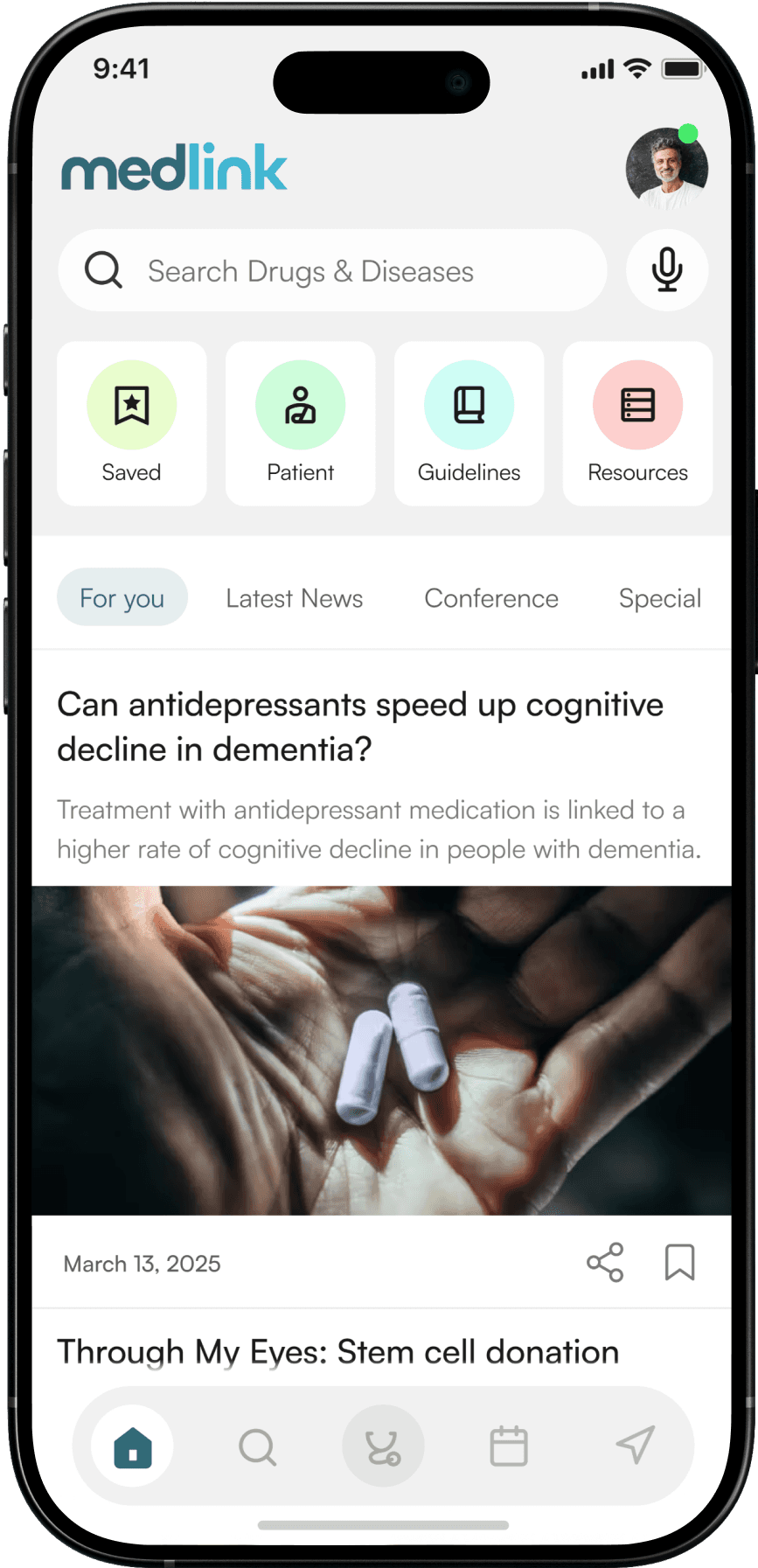
A Complete Home Screen
Access all important tools, relevant and personalized news, search for drug information, calendar for your appointments and chat to connect with other doctors in the community right off the bat.
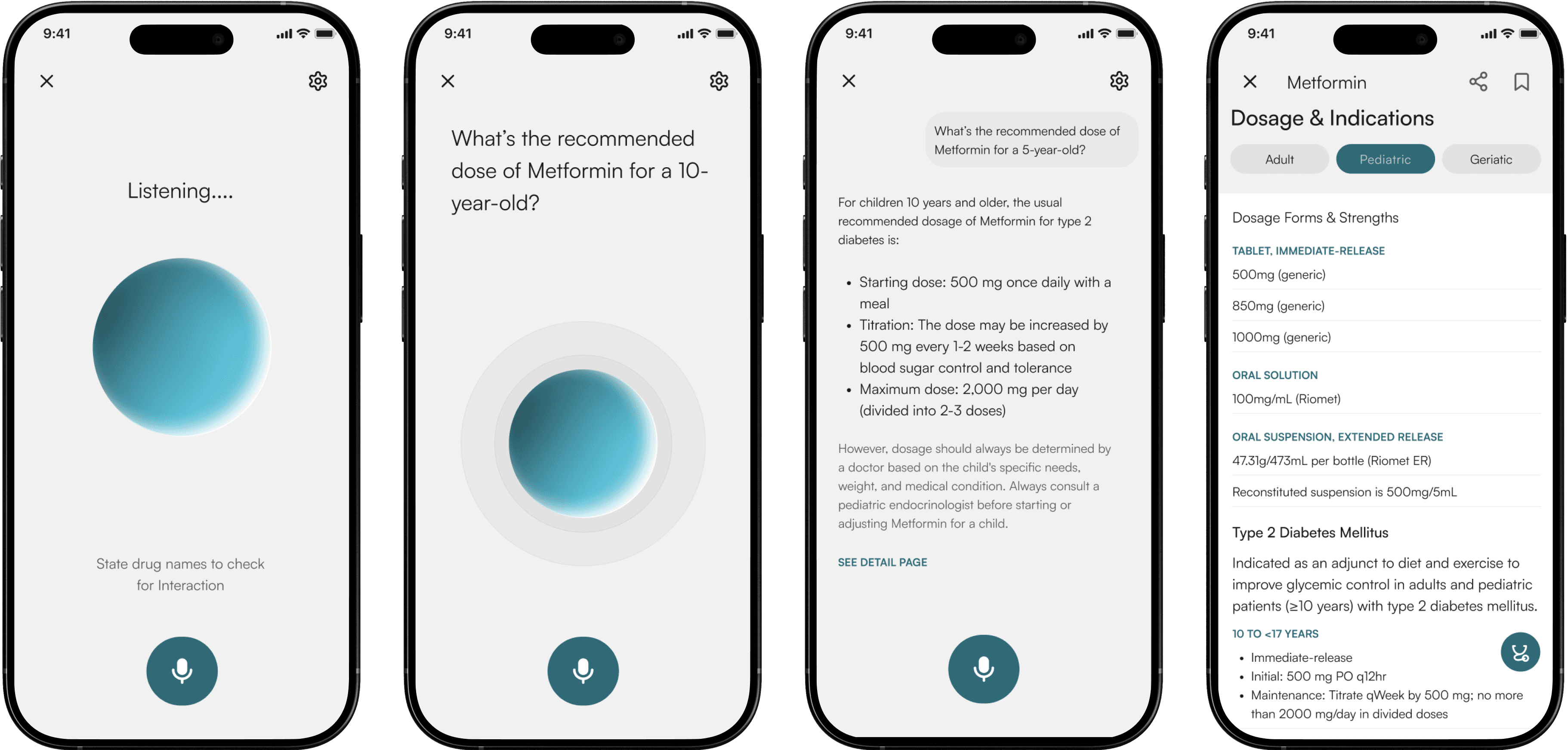
We hear your voice
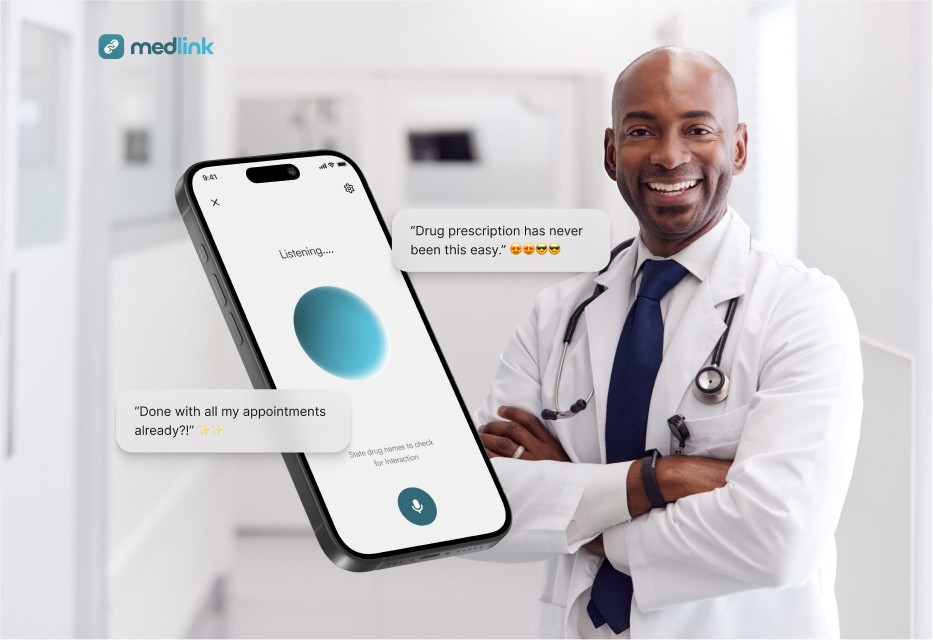
Instant, Hands-Free Drug Information with AI Voice Search
Fastest response time with AI-powered medical voice recognition.
Works in noisy hospital environments with noise cancellation.
Understands medical context
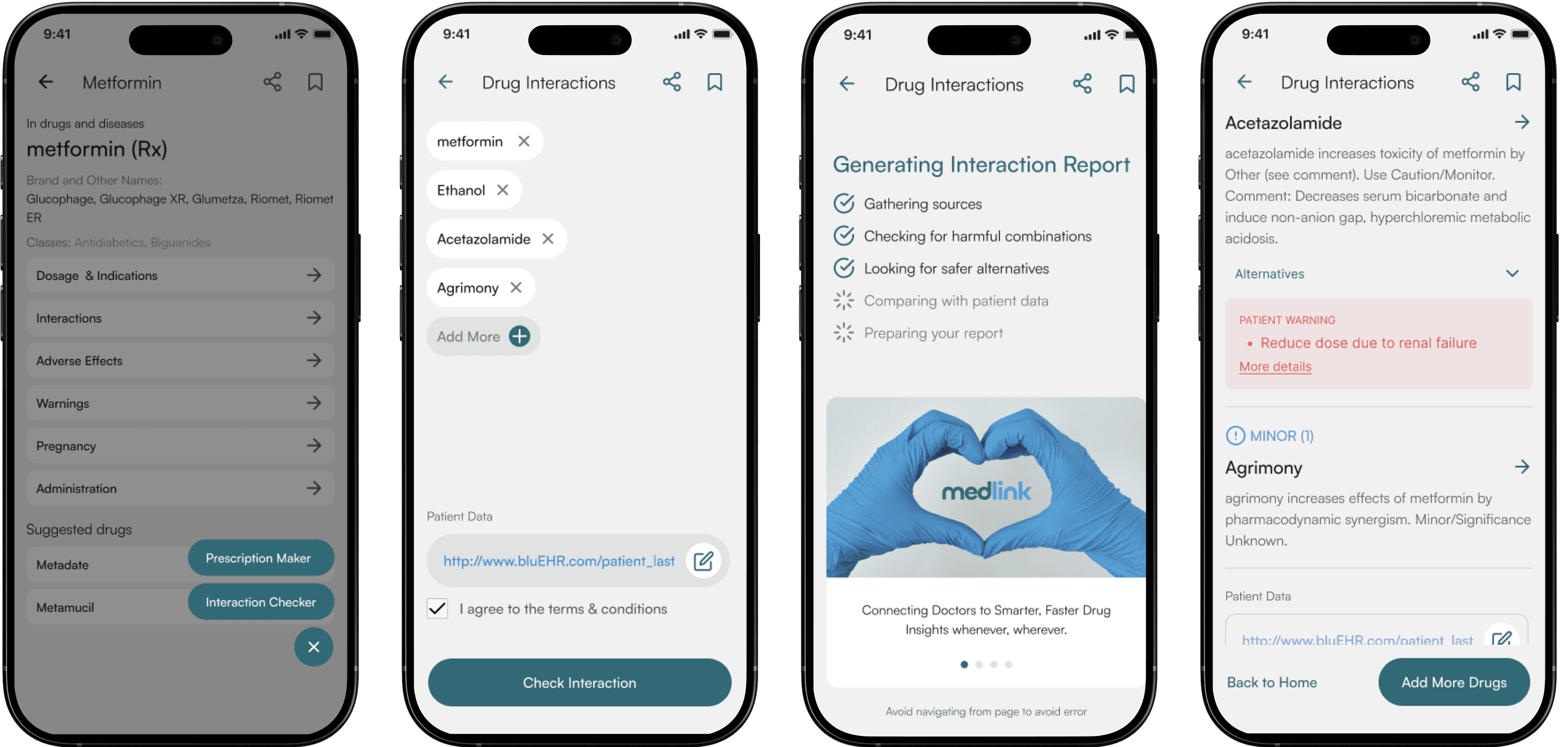
Smart Doctor-Focused Features in your hands
Advanced Drug Interaction & Personalized Alerts
Real-time drug interaction checker with AI-powered alerts.
Patient-specific warnings (e.g., "Reduce dose due to renal failure").
EHR integration to sync with patient records.
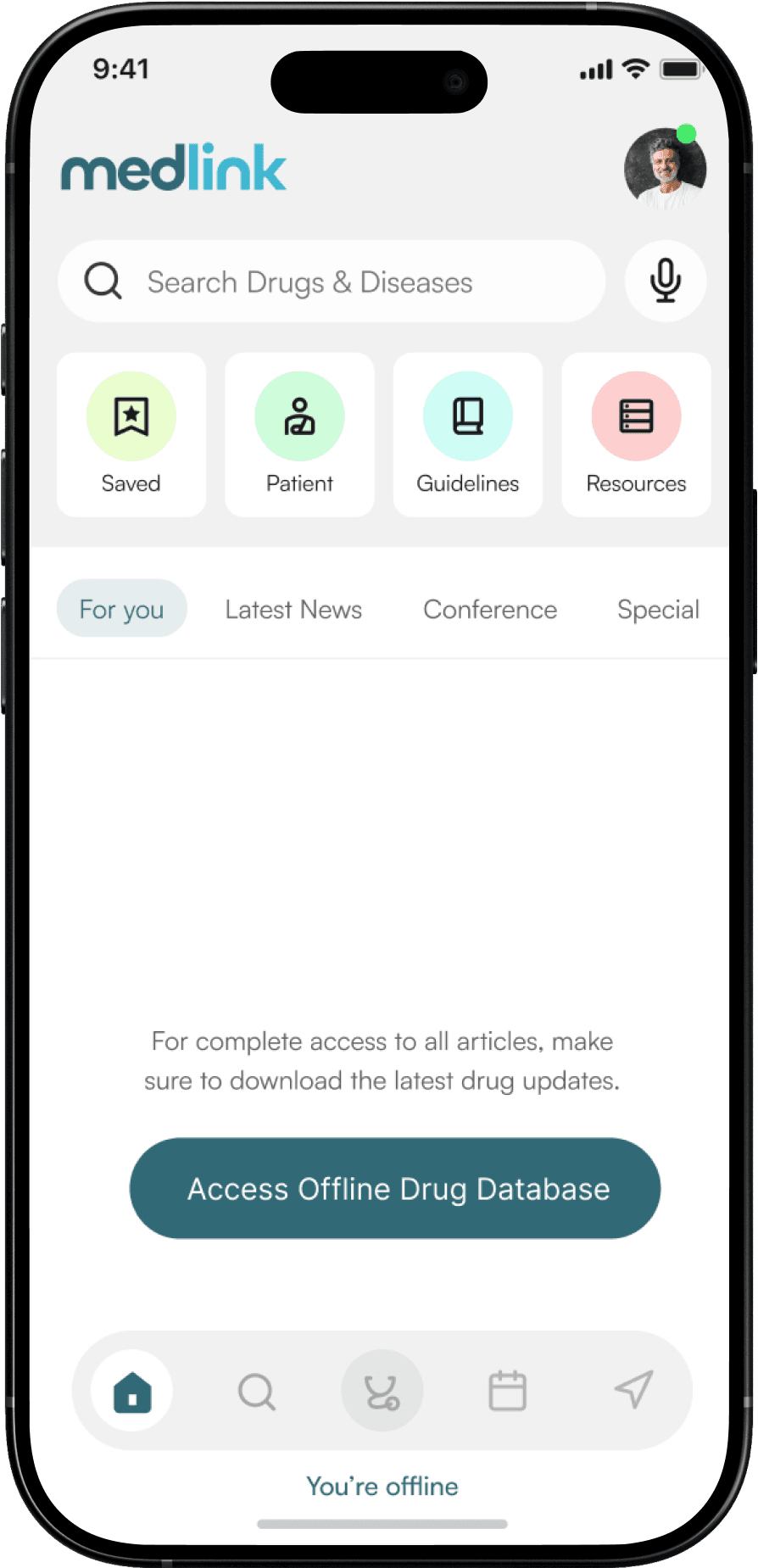
No Internet? No Problem.
An offline Database is ready at your disposal for quick lookups in remote or low-network areas.
Measure Success
Usability Metrics
Time to Find Info: Time from opening app to finding details.
Search Success Rate: % of successful searches on the first try.
Error Rate: Mistakes due to poor UX.
Task Completion Rate: % of tasks completed (e.g., checking interactions).
Engagement Metrics
Daily Active Users (DAU): Frequency of app use.
Repeat Sessions: Return rate of users over time.
Offline Usage: % of sessions without internet.
Satisfaction Metrics
NPS (Net Promoter Score): Likelihood of recommending the app.
CSAT: User satisfaction after tasks.
Qualitative Feedback: User suggestions and pain points.
Clinical Relevance
NPS (Net Promoter Score): Likelihood of recommending the app.
CSAT: User satisfaction after tasks.
Qualitative Feedback: User suggestions and pain points.
Example Benchmarks
Time to Find Info: <15 seconds
Search Success Rate: >90%
DAU: 70%+ of testers
NPS: +40 or higher